
Cover Letter Mistakes Recruiters Reject Fast and How to Fix Them
From a recruiter with 20 years of screening experience: the cover letter errors that kill strong applications and the exact structure that gets read.
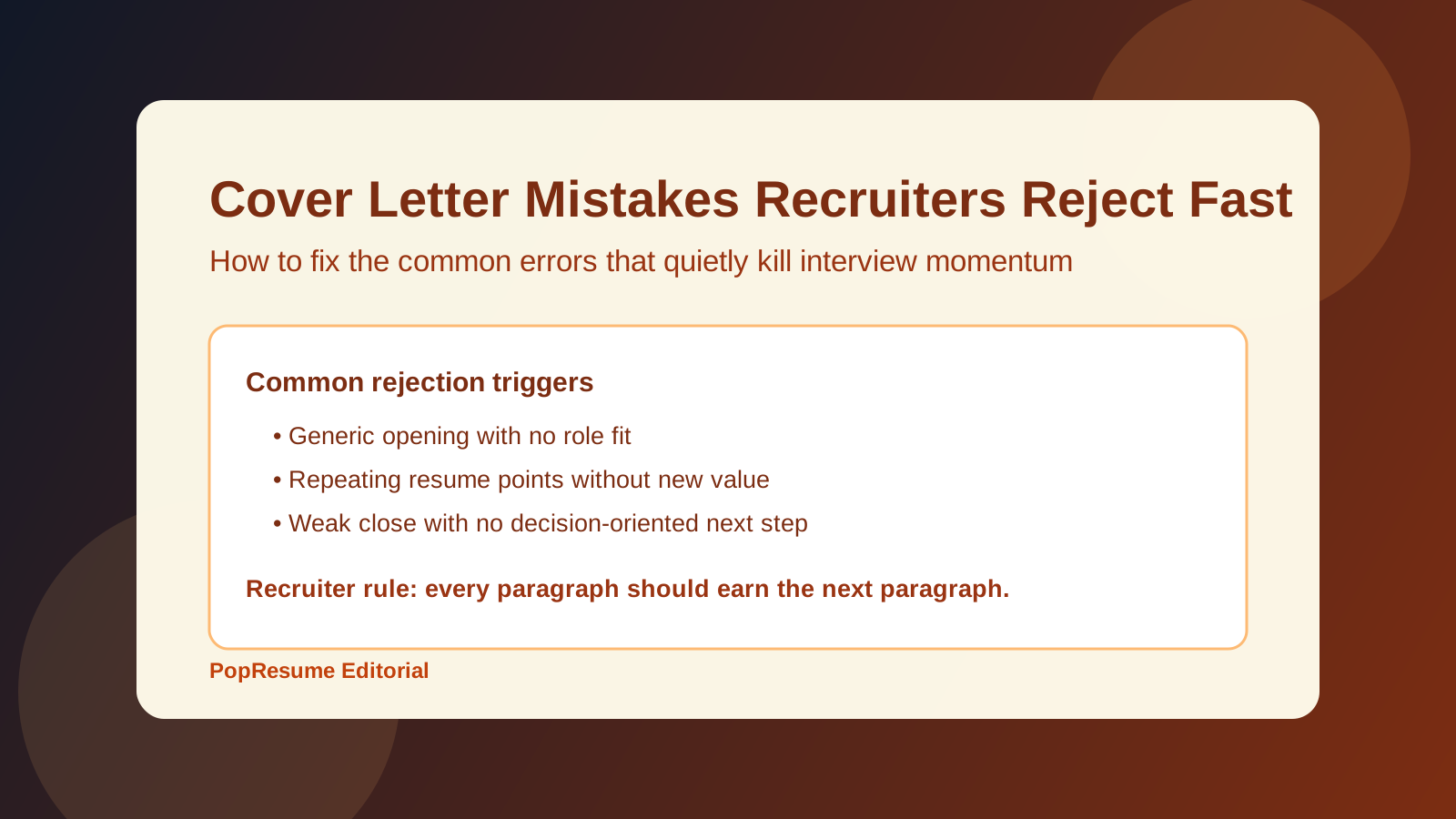
I have reviewed cover letters for two decades. Most are not terrible. They are just forgettable.
A strong cover letter does one job: it gives your resume context and reduces hiring risk. If I understand your fit, impact, and intent in under a minute, you move forward.
How Recruiters Actually Read Cover Letters
We rarely read cover letters as literature. We scan for decision signal:
- Is this written for this role or copied from another application?
- Can the candidate solve the problems this team is trying to solve?
- Does the evidence match the claims?
- Does the tone sound professional and credible?
When those answers are clear, your odds improve.
Mistake 1: Generic Opening With No Role Fit
The fastest rejection trigger is a boilerplate opening.
- Weak:
I am writing to apply for the position at your company. - Strong:
I am applying for the Senior Customer Success Manager role because your team is scaling enterprise onboarding, and I have led onboarding redesigns that reduced time-to-value by 22%.
Open with role, business context, and proof. Do not waste the first paragraph on generic enthusiasm.
Mistake 2: Repeating the Resume Line by Line
If your letter simply duplicates your resume bullets, you force the reviewer to do the synthesis work.
Your cover letter should explain:
- Why your experience is relevant now.
- Why your outcomes matter for this team.
- Why your transition from prior roles is logical.
Think interpretation, not repetition.
Mistake 3: Making It About You, Not the Team
This is subtle and very common. Candidates over-index on what they want and under-index on business value.
- Weak focus: growth, passion, personal goals only.
- Strong focus: team outcomes, execution reliability, measurable contribution.
I want to hire people who understand constraints and can deliver in context.
Mistake 4: Weak Close With No Clear Next Step
Your closing should reinforce value and invite action.
- Weak:
Thanks for your time. I hope to hear from you. - Strong:
I can bring repeatable playbooks for onboarding velocity and retention. I would welcome a short conversation to discuss how I would apply that in your Q3 growth plan.
Confidence is helpful. Pressure is not. Keep it direct and respectful.
Mistake 5: Errors That Signal Low Judgment
Typos happen. Patterned sloppiness is different.
High-risk errors include:
- Wrong company name.
- Wrong job title.
- Broken formatting.
- Overly casual tone.
- Claims that cannot be supported in interview.
If your letter introduces trust friction, your resume has to work twice as hard.
The Structure I Recommend
Use a four-part structure and keep total length tight.
Paragraph 1: Context + fit
State the role and one reason your background matches this team now.
Paragraph 2: Evidence
Add one concrete example with measurable impact.
Paragraph 3: Relevance
Map your strengths to a likely team challenge.
Paragraph 4: Close
Reaffirm contribution and invite next-step conversation.
Quick quality checklist
- Customized company and role references.
- At least one quantified outcome.
- Clear business value statement.
- No unverified claims.
- Error-free final pass.
Build your first draft quickly, then tighten it with the Free Cover Letter Checker before sending.
Final Recruiter Take
A good cover letter does not compensate for a weak resume, but it absolutely increases conversion when your resume is already solid.
Use it to show judgment, relevance, and communication quality.
Once your letter is ready, pair it with a targeted resume in the AI Resume Builder, validate your resume with the Free ATS Resume Checker, and track response rates in the Job Application Tracker.
Sources
Last checked: April 20, 2026.