
How to Write a Resume That Gets Interviews: Recruiter System
A recruiter-tested resume framework: what to include, what to remove, and how to tailor your resume so hiring teams understand your value quickly.
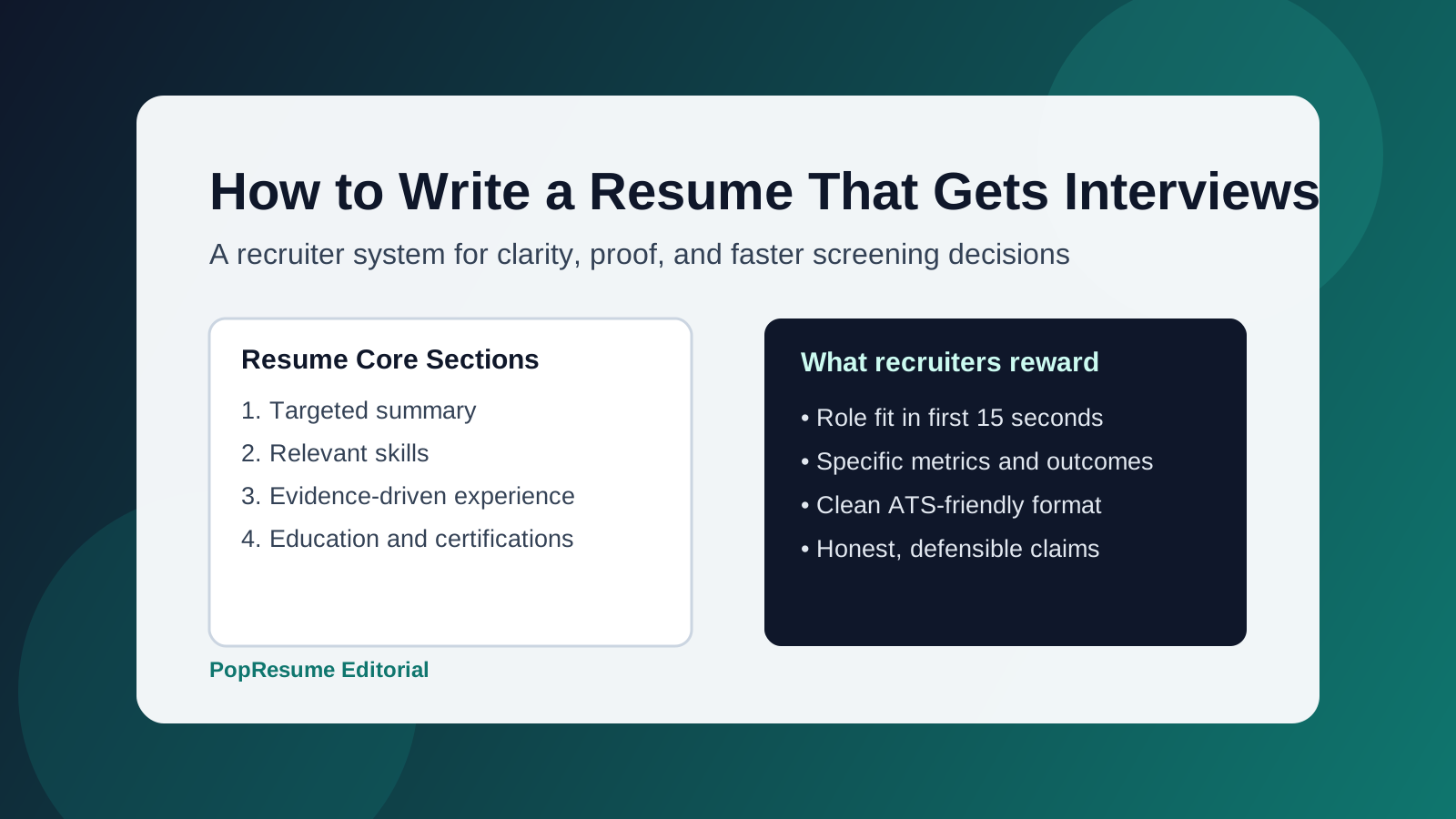
After 20 years in recruiting, here is the truth: most qualified candidates lose interviews in the document stage because their resume does not communicate fit fast enough.
A winning resume is clear, relevant, and measurable. It does not try to tell your entire life story.
What a Resume Needs to Do
Your resume has one objective: earn the next conversation.
To do that, it needs to answer four questions quickly:
- What role are you targeting?
- What outcomes have you delivered?
- Which tools and skills support those outcomes?
- Why are you credible for this level?
If your first page does not answer those questions clearly, interview rates usually drop.
The Core Sections That Actually Matter
I recommend this default structure for most private-sector roles:
- Contact information
- Targeted summary
- Skills and tools
- Experience
- Education and certifications
Contact information
Keep this clean and professional. Include city/state, email, phone, and relevant profile links.
Targeted summary
Use 2 to 3 lines with role fit and evidence. Avoid generic adjectives.
Skills and tools
Include role-relevant skills only. Put top requirements first.
Experience
Use reverse chronological order. Prioritize impact, not task inventory.
Education and certifications
Include only what adds relevance for the role.
How to Write Bullets That Prove Impact
Most bullets fail because they describe activity without outcome.
Use this pattern:
Action + Scope + Result
Examples:
Redesigned onboarding workflow for 3 customer segments, reducing activation time by 19%.Owned weekly forecast process across 5 sales pods, improving forecast accuracy from 71% to 88%.Built SQL dashboard for pipeline risk, cutting manual reporting time by 6 hours per week.
If you cannot measure impact, estimate responsibly with ranges and clear language.
How to Tailor in 15 Minutes
Tailoring does not require a full rewrite.
Minute 1 to 5
- Highlight repeated requirements in the job posting.
Minute 6 to 10
- Update summary and skills order to match those requirements.
Minute 11 to 15
- Reorder top bullets in each role so relevant outcomes appear first.
This simple process usually improves both ATS relevance and recruiter readability.
The Format Choice Most People Get Wrong
Choose format based on hiring signal, not preference.
| Format | Best use case | Risk |
|---|---|---|
| Reverse chronological | Most candidates with continuous relevant experience | Can expose gaps if not explained elsewhere |
| Functional | Career changers with highly transferable skills | Recruiters may distrust timeline clarity |
| Hybrid | Candidates with both strong skills and clear chronology | Can become too long if not edited hard |
For most applications, reverse chronological remains the safest option.
Common Mistakes I Still See Every Week
- Role-agnostic summary that could fit any job.
- Bullets with no numbers or outcomes.
- Dense formatting that is hard to skim.
- Outdated or irrelevant experience crowding page one.
- Keyword stuffing that reads unnaturally.
You can fix all of these without changing your actual background.
A Practical Resume Template
Header
Name | city/state | email | phone | LinkedIn
Summary
Two lines defining role, years of relevant experience, and 1 to 2 quantified outcomes.
Skills
8 to 14 role-relevant skills in plain language.
Experience
For each role:
- Title, company, dates
- 3 to 5 bullets with measurable outcomes
Education and Certifications
Degree, institution, relevant certs
Run this draft through the Free ATS Resume Checker before applying.
Final Recruiter Take
A strong resume is not about writing more. It is about reducing ambiguity.
When the document is clear, the candidate is easier to champion internally.
Build and tailor your resume in the AI Resume Builder, check parsing in the Free ATS Resume Checker, and monitor which versions convert in the Job Application Tracker.
Sources
Last checked: April 20, 2026.