
Why Simple Resumes Work: A Recruiter’s Opinion After 20 Years
Simple resumes are not boring. They are strategic. Here is why clean structure consistently outperforms complex design in ATS screening and recruiter decision-making.
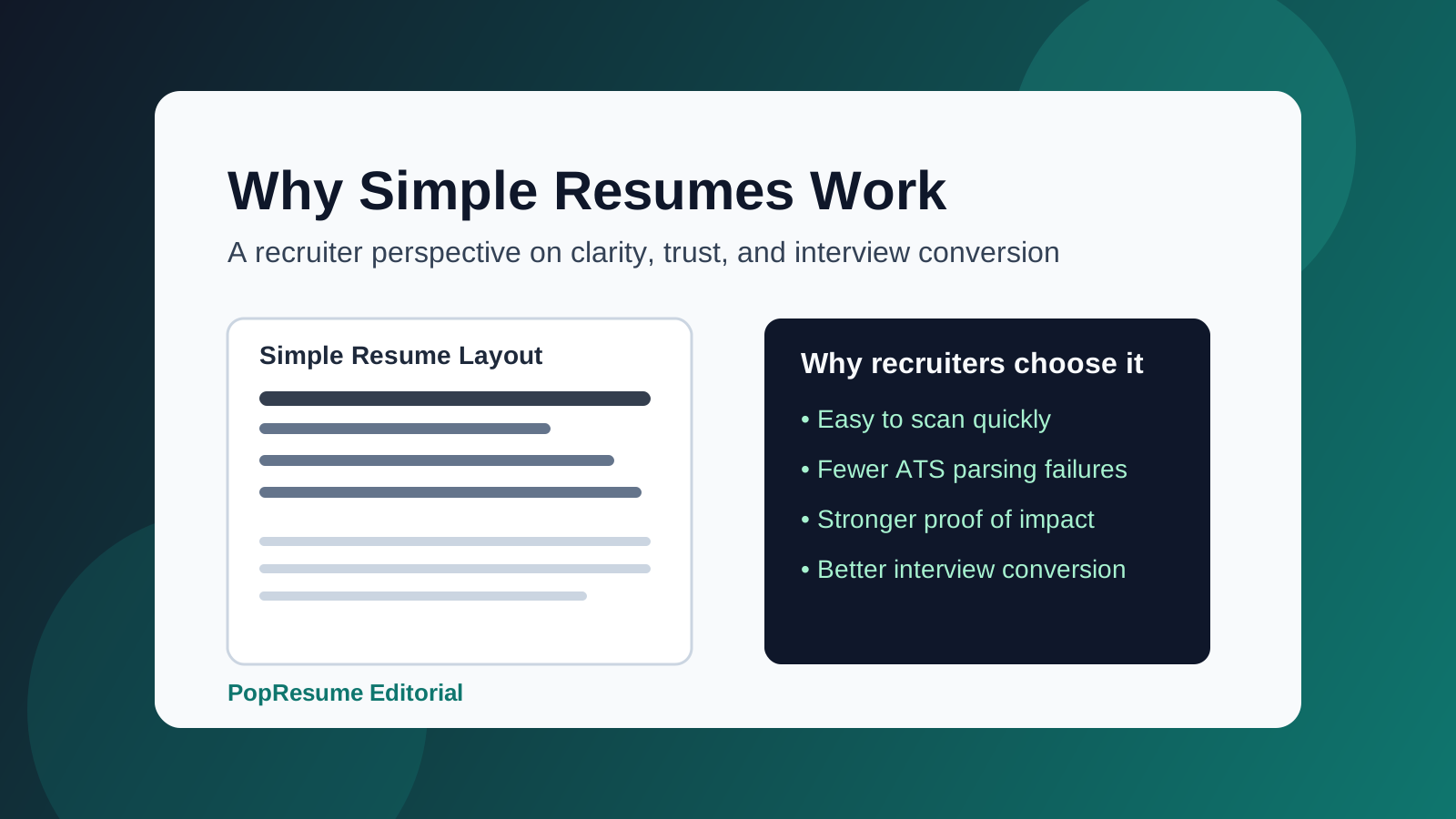
I have spent two decades reviewing resumes, and I have a strong opinion on this topic: simple resumes win more often.
Not because recruiters are old-fashioned. Not because design does not matter. Simple resumes win because hiring teams make decisions quickly, under pressure, and across high application volume. Clarity is a competitive advantage.
Candidates frequently assume they need a visually complex document to stand out. In reality, they need a document that makes relevance obvious in seconds.
The Problem Most Resume Advice Gets Wrong
A lot of online resume advice is design-first. You see templates with sidebars, graphics, and unconventional layouts presented as the path to better outcomes.
That advice confuses attention with persuasion.
Getting attention is easy. Earning interview trust is harder. Recruiters are trying to answer practical questions fast:
- Does this person match the role requirements?
- Can they demonstrate real outcomes?
- Is their experience recent and relevant?
- Should I move them to interview now?
A simple resume helps answer those questions quickly. A complex resume often delays answers.
What Recruiters Actually Need in the First 15 Seconds
When I open a resume, I am usually scanning first, then reading deeper only if the initial signal is strong. This is normal in recruiting operations, especially when applications are high.
In those first seconds, I look for:
- Clear target role alignment
- Top skills that match the posting
- Evidence-based achievements, not vague claims
- Easy-to-follow chronology
If those are visible quickly, I keep reading. If they are buried under design complexity, the candidate loses momentum.
This is the core reason simple resumes perform better. They reduce time to confidence.
Why Simple Layouts Perform Better in ATS Workflows
ATS platforms are built to process and organize candidate data. Simple formatting improves consistency when resumes are parsed into searchable profiles.
In practical terms, simple layouts help because they:
- Preserve section boundaries in parsing
- Keep dates and roles easier to interpret
- Reduce risk from columns, icons, and decorative containers
- Improve text extraction quality for search and review
Candidates do not need perfect parsing every time. They need reliable enough parsing that their strongest signals are preserved.
That is why I advise almost everyone to prioritize structure over design complexity.
If you want to validate your resume before sending it, use the Free ATS Resume Checker.
How Complex Design Hurts Strong Candidates
I have seen highly qualified people lose interviews because their resume added friction. Here are common examples.
Example 1: The two-column trap
A two-column layout can look polished, but in many workflows it splits context. Skills in the left rail and outcomes in the right body can become disconnected in quick scanning.
Example 2: Decorative icons and progress bars
Icons and bars can consume space without adding decision value. They often replace specific evidence with visual shorthand that hiring teams cannot validate.
Example 3: Dense visual styling
Heavy color blocks, unusual fonts, and tight spacing reduce readability. Recruiters are not grading artistic direction. They are making risk decisions.
This does not mean visual quality is irrelevant. It means visual quality should support comprehension, not compete with it.
The Simple Resume Framework I Recommend
This framework works across most roles and industries:
1. Header
Include name, city, email, phone, LinkedIn. Keep it clean and compact.
2. Targeted summary
Two to three lines focused on role fit and strongest measurable strengths.
3. Skills section
Use plain language skills and tools that map directly to job posting priorities.
4. Experience section
Reverse chronological order with concise bullets that show outcomes.
5. Education and certifications
Only include what supports role relevance.
Formatting principles:
- One column
- Clear section headings
- Consistent date style
- White space that supports quick scanning
- No decorative elements that do not add hiring value
If you need a practical builder that keeps this structure intact, use the AI Resume Builder.
Before and After Clarity Examples
The fastest way to improve a resume is to convert vague language into proof language.
Vague summary
Motivated professional with strong communication skills and leadership experience.
Clear summary
Operations manager with 6 years of experience improving service delivery. Led process redesign across two sites, reducing turnaround time by 22% while increasing customer satisfaction scores.
Vague bullet
Worked on cross-functional projects to improve team outcomes.
Clear bullet
Coordinated cross-functional launch plan across product, support, and sales teams, delivering rollout on time and reducing first-month customer escalations by 31%.
Vague skills section
Leadership, communication, teamwork, Microsoft Office
Clear skills section
Program management, stakeholder communication, Excel modeling, Salesforce reporting, KPI dashboarding
Simple resumes make these improvements more visible. Complex templates often hide them.
Simple Resume Scorecard
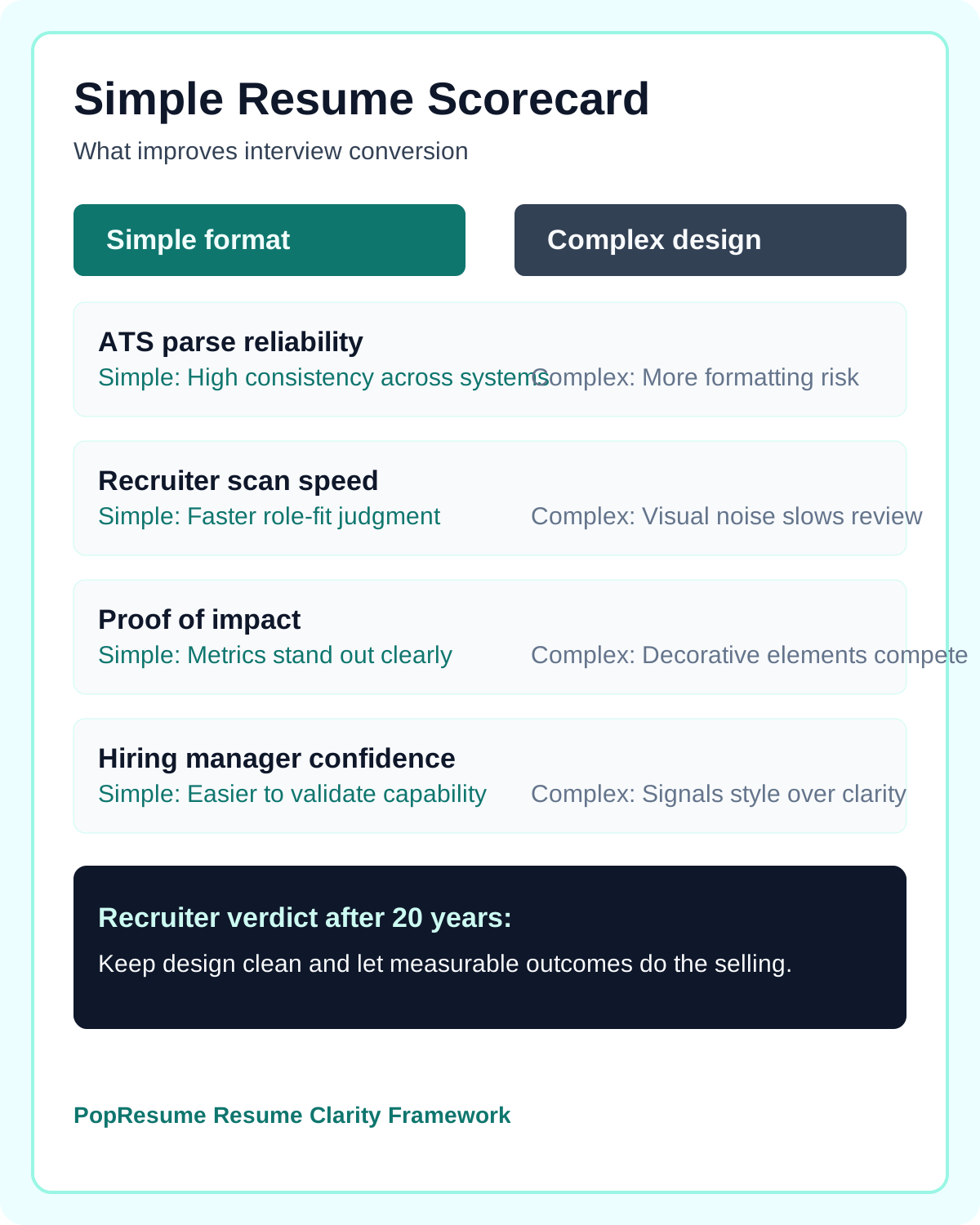
Use this test before every application:
- Can a recruiter understand role fit in under 15 seconds?
- Are top achievements visible on page one?
- Are bullet points measurable and specific?
- Is formatting clean and easy to parse?
- Does every section support interview readiness?
If the answer is yes, your resume is probably in strong shape.
What to Change This Week for Better Results
If your current resume feels busy or underperforming, use this one-week reset:
- Day 1: Remove all non-essential visual elements.
- Day 2: Rebuild summary for role clarity.
- Day 3: Rewrite top 10 bullets with measurable outcomes.
- Day 4: Align skills section to target posting language.
- Day 5: Run ATS check and fix formatting issues.
- Day 6: Submit tailored applications to your top targets.
- Day 7: Track responses and keep iterating based on data.
Use the Job Application Tracker to compare callback rates by resume version. Most candidates improve faster when they track what is working.
Final Recruiter Opinion
Simple resumes work because they make decision-making easier for every step in the hiring process. They support ATS readability, recruiter speed, and hiring manager confidence.
In a competitive market, clarity is not a style preference. It is a performance strategy.
If you want more interviews, do not ask whether your resume looks impressive. Ask whether it makes your value undeniable in under 15 seconds.
Start with the Free ATS Resume Checker, then build a high-clarity version in the AI Resume Builder, and monitor response quality inside the Job Application Tracker.
Sources
Last checked: April 21, 2026.